
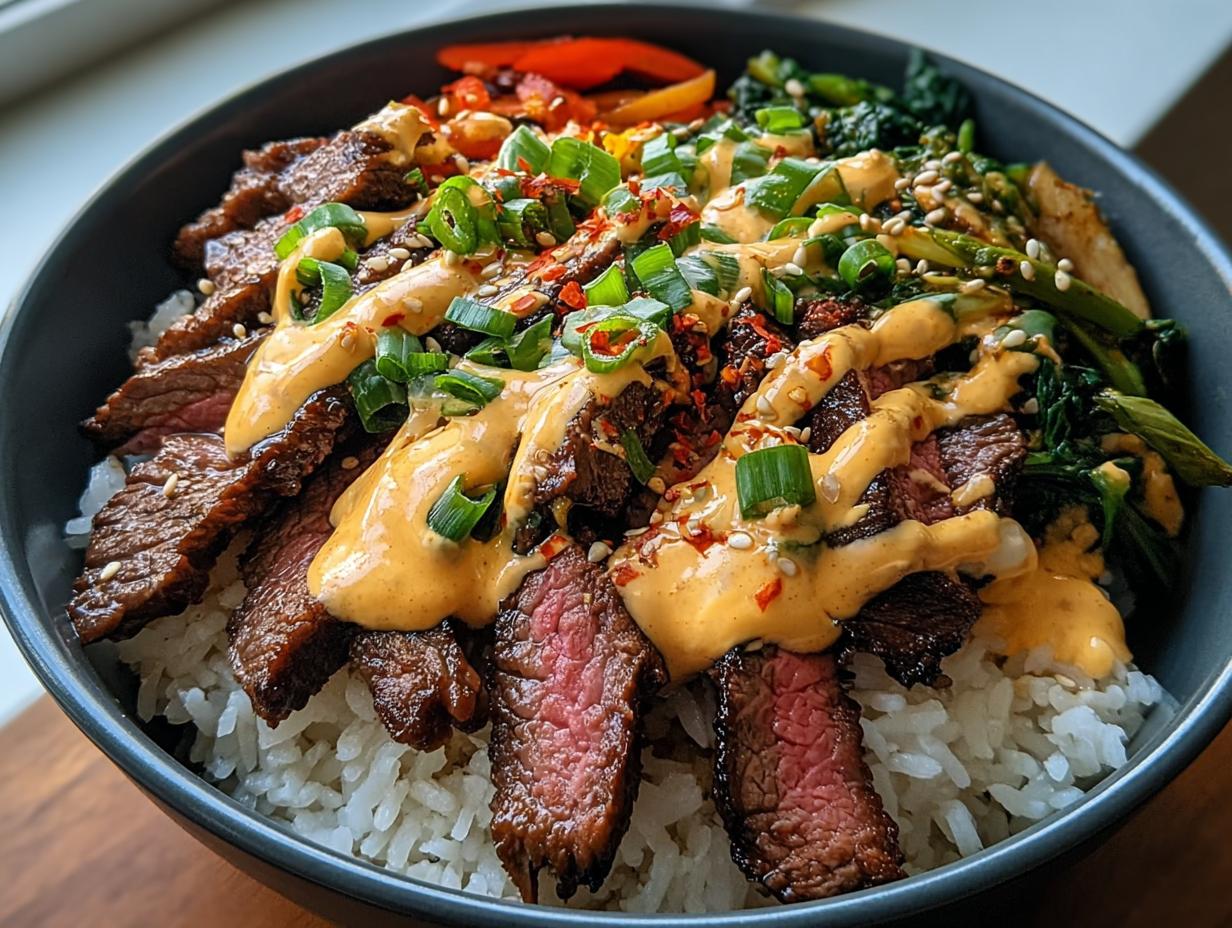
There are nights when only the bold, vibrant flavors of Korean BBQ will do, but who has the time for a full restaurant experience? Enter my absolute favorite solution: Korean BBQ Steak Rice Bowls with Spicy Cream Sauce. This dish is my little secret weapon for transforming a regular Tuesday into a culinary adventure, bringing that incredible restaurant-quality taste right into your own kitchen, faster than you can believe. It all started one evening during the peak of the pandemic. I was seriously craving my go-to order from our favorite Korean BBQ spot, but we were all stuck at home. So, I grabbed some steak, a handful of veggies, and started playing around. When I drizzled that creamy, spicy sauce over a bowl shimmering with colorful rice and perfectly grilled steak, it was like a taste of freedom! That first bite transported me right back to the lively buzz of the restaurant, and I realized food truly has the power to take you places, even when you’re just in your kitchen. Now, this dish is a total staple for me, a way to gather friends and make any meal feel like a special occasion. As a Visual Culinary Artist & Aesthetic Designer, I’m always looking for that perfect balance of flavor and presentation, and these bowls nail it every single time.
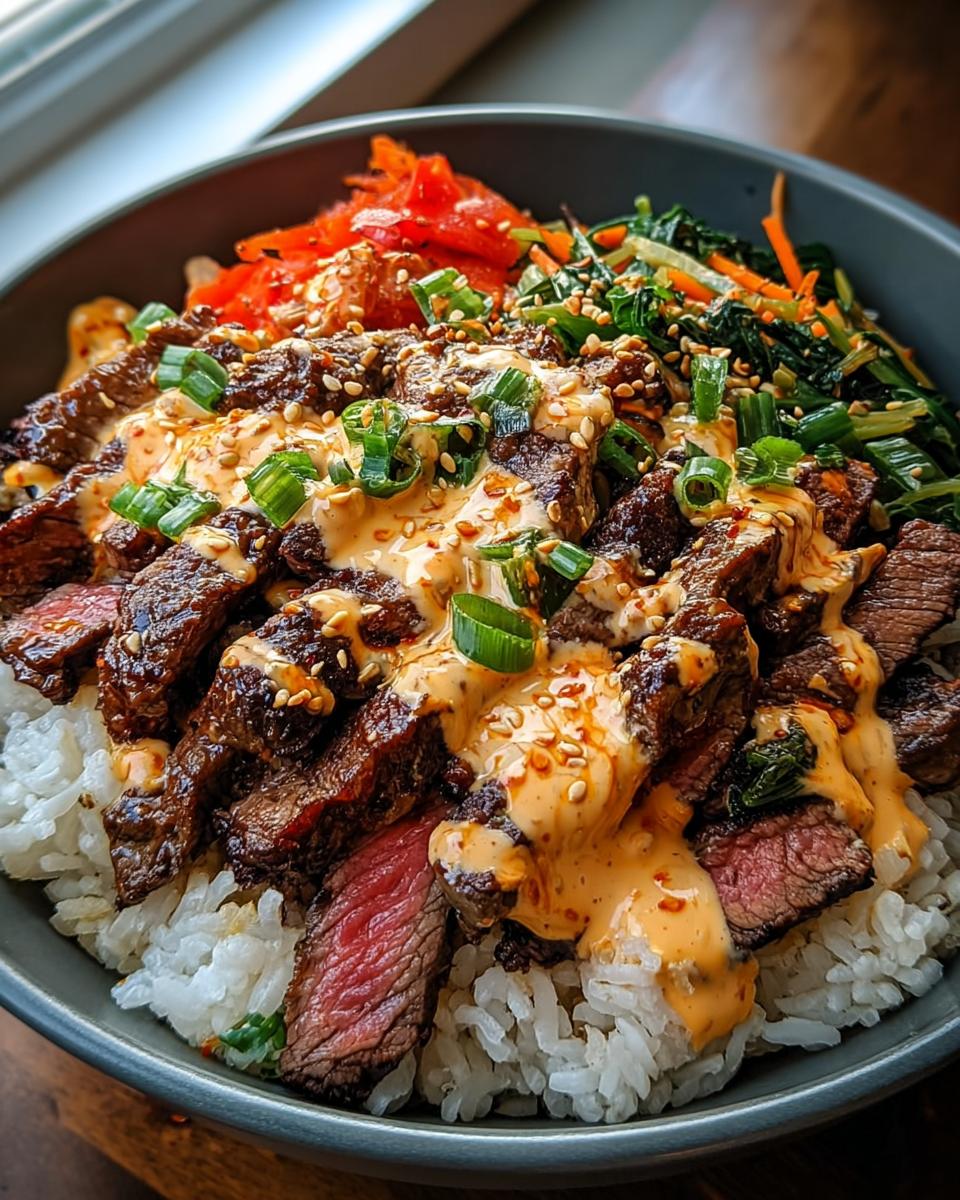
Why You’ll Love These Korean BBQ Steak Rice Bowls
Okay, I gotta tell you why this recipe is my absolute go-to. It’s all about those little wins that make cooking feel like a joy, not a chore!
- Seriously Quick: You can have this gorgeous meal on the table in under an hour, perfect for those busy weeknights when you’re craving something amazing but don’t have ages to cook.
- Flavor Bomb Alert: The marinade is savory and a little sweet, and that spicy cream sauce? Oh my gosh, it’s got this perfect tangy kick that just ties everything together. It’s a flavor party!
- A Feast for the Eyes: As a visual person, I love how vibrant these bowls look. The colors are so pretty, making any meal feel special and totally Instagram-worthy.
- Mix and Match Magic: Don’t have flank steak? No problem! Use another cut of beef, chicken, or even tofu. Same goes for the veggies – whatever you have in the fridge works!
- So Darn Easy: I promise, this recipe is super straightforward. You get that amazing restaurant-quality taste with way less effort than you’d think.
Essential Ingredients for Korean BBQ Steak Rice Bowls
Alright, let’s talk about what you’ll need to make these magical bowls of deliciousness happen! I’ve broken it down by category so it’s super easy to shop and prep. Trust me, getting these right is half the battle for that amazing flavor!
Protein
This is the star of the show! We need something that takes well to a good marinade and sears up beautifully.
- 500g flank steak or your favorite cut of beef (like sirloin or ribeye), sliced thinly against the grain *before* marinating can also work, but I like marinating a whole piece and slicing *after* cooking for maximum juiciness!
Marinade
This is where all that yummy Korean flavor starts to build!
- 30ml soy sauce (low sodium is great if you’re watching salt!)
- 30ml brown sugar (this gives it that lovely caramel note)
- 15ml sesame oil (don’t skip this, it’s key!)
- 15g minced garlic (fresh is always best here)
- 5g grated ginger (a little zing!)
Base
Gotta have something to soak up all that sauce!
- 200g cooked white or brown rice (whatever you prefer!)
Vegetables
For color, crunch, and good-for-you stuff!
- 200g mixed vegetables, cut into bite-sized pieces. Think bell peppers (any color!), broccoli florets, or even some sliced carrots. Get creative with what you have!
For Cooking
Just the basics to get everything sizzling.
- 30ml vegetable oil (or another high-heat oil like canola or avocado)
Spicy Cream Sauce
This is the secret weapon, folks. Creamy, tangy, and just the right amount of heat!
- 120g sour cream (full fat gives the best texture, but light works too)
- 30g gochujang (Korean chili paste – this is essential for the flavor profile, start with this amount and add more if you like it spicier!)
- 15g honey (to balance out the heat and tang)
- 5ml lime juice (adds a lovely bright note)
Garnish
The finishing touches that make it look restaurant-ready!
- Sesame seeds, for sprinkling
- 1 green onion, thinly sliced (both the white and green parts are great!)
Step-by-Step Guide to Making Korean BBQ Steak Rice Bowls
Alright, let’s get cooking! It’s time to turn these amazing ingredients into a meal that’ll blow your socks off. Don’t worry, it’s way simpler than it looks, and I’ll walk you through every step. You can even check out this spicy chickpea bowl recipe for more ideas on bowl goodness!
Marinating the Steak
First things first, get that steak soaking up all the good stuff! In a bowl, whisk together the soy sauce, brown sugar, sesame oil, minced garlic, and grated ginger. Toss in your flank steak, making sure it’s completely coated. Let it hang out and marinate for at least 30 minutes. Pop it in the fridge if you’re going longer than an hour; this really helps all those flavors sneak deep into the meat for maximum deliciousness.
Preparing the Rice and Sauce
While the steak is doing its thing, get your rice going according to the package directions. Keep it warm! In a separate little bowl, we’re making our flavor powerhouse sauce: just whisk together that sour cream, gochujang, honey, and lime juice. Keep whisking until it’s super smooth and dreamy. Set this aside, because we’re going to be drizzling it all over later! You can find more about making delicious bowls like this Korean BBQ steak one at Recipe Cell.
Cooking the Steak and Vegetables
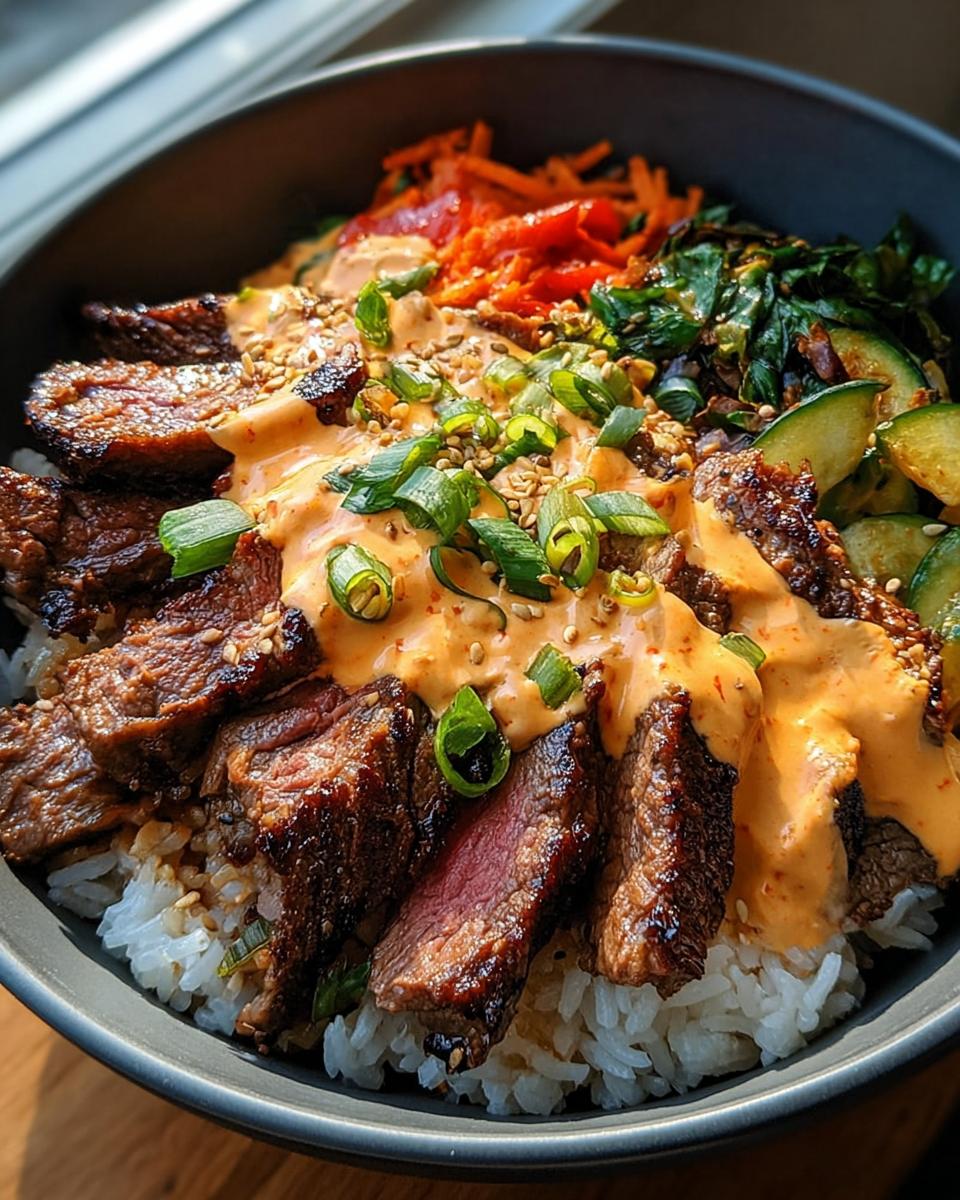
Now for the sizzle! Heat up your vegetable oil in a nice big skillet over medium-high heat. You want it nice and hot, but not smoking. Take your marinated steak out, let any extra marinade drip off (we don’t want too much liquid in the pan), and carefully lay it in the hot skillet. Sear it for about 4-5 minutes per side. How long you cook it depends on how you like your steak – I aim for medium-rare, which means it’s still a little pink inside. When the steak is done, toss your chopped veggies right into the same skillet. Don’t clean it out! That tasty steak goodness is part of the flavor. Sauté them for about 3-5 minutes until they’re tender but still have a little bite to them.
Resting and Slicing the Steak
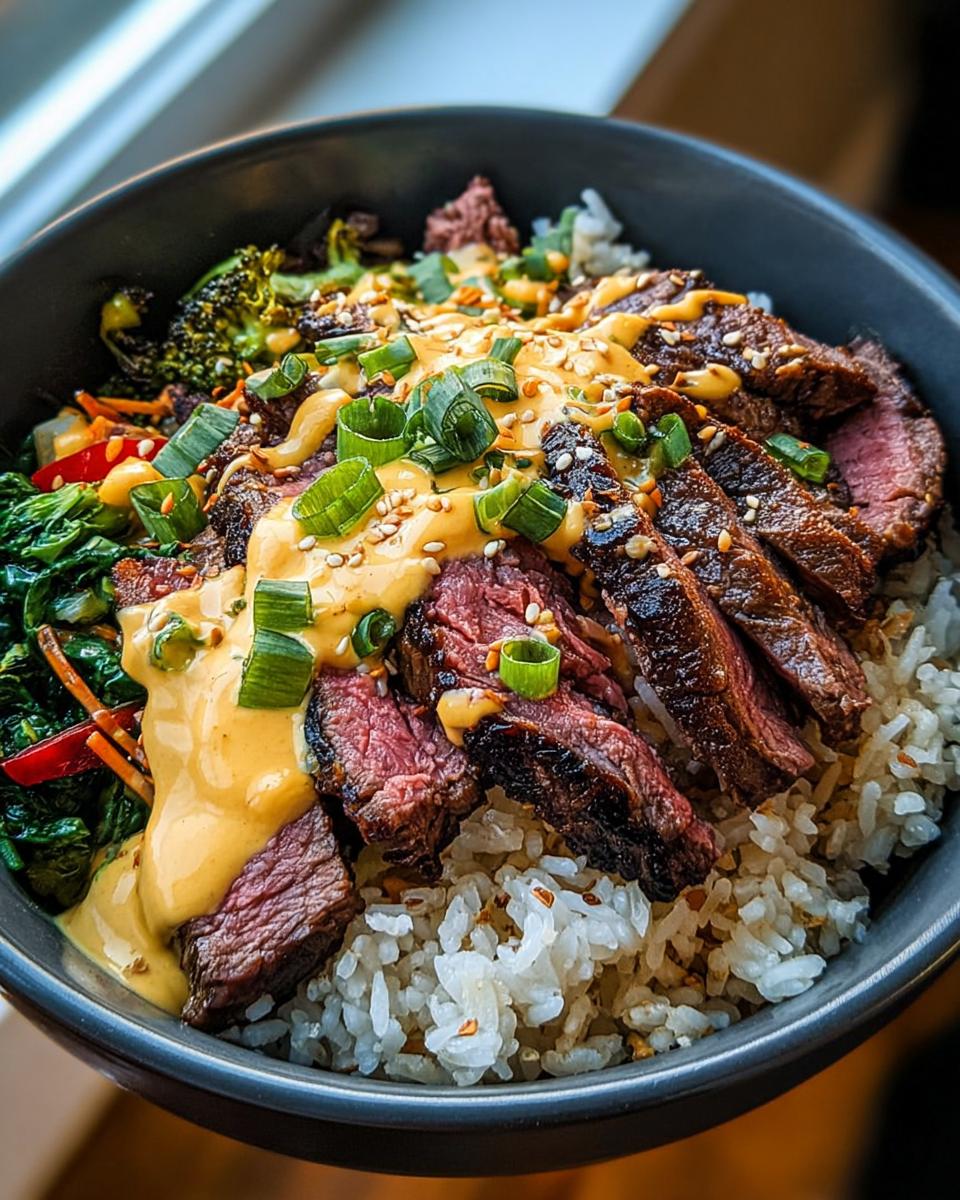
This is a step you *cannot* skip if you want tender steak! Move the cooked steak to a clean cutting board and let it rest for at least 5 minutes. This lets all those juicy flavors settle back into the meat. Then, slice it thinly against the grain. You’ll see those beautiful muscle fibers; cut across them. This makes every bite incredibly tender and easy to chew.
Assembling Your Korean BBQ Steak Rice Bowls
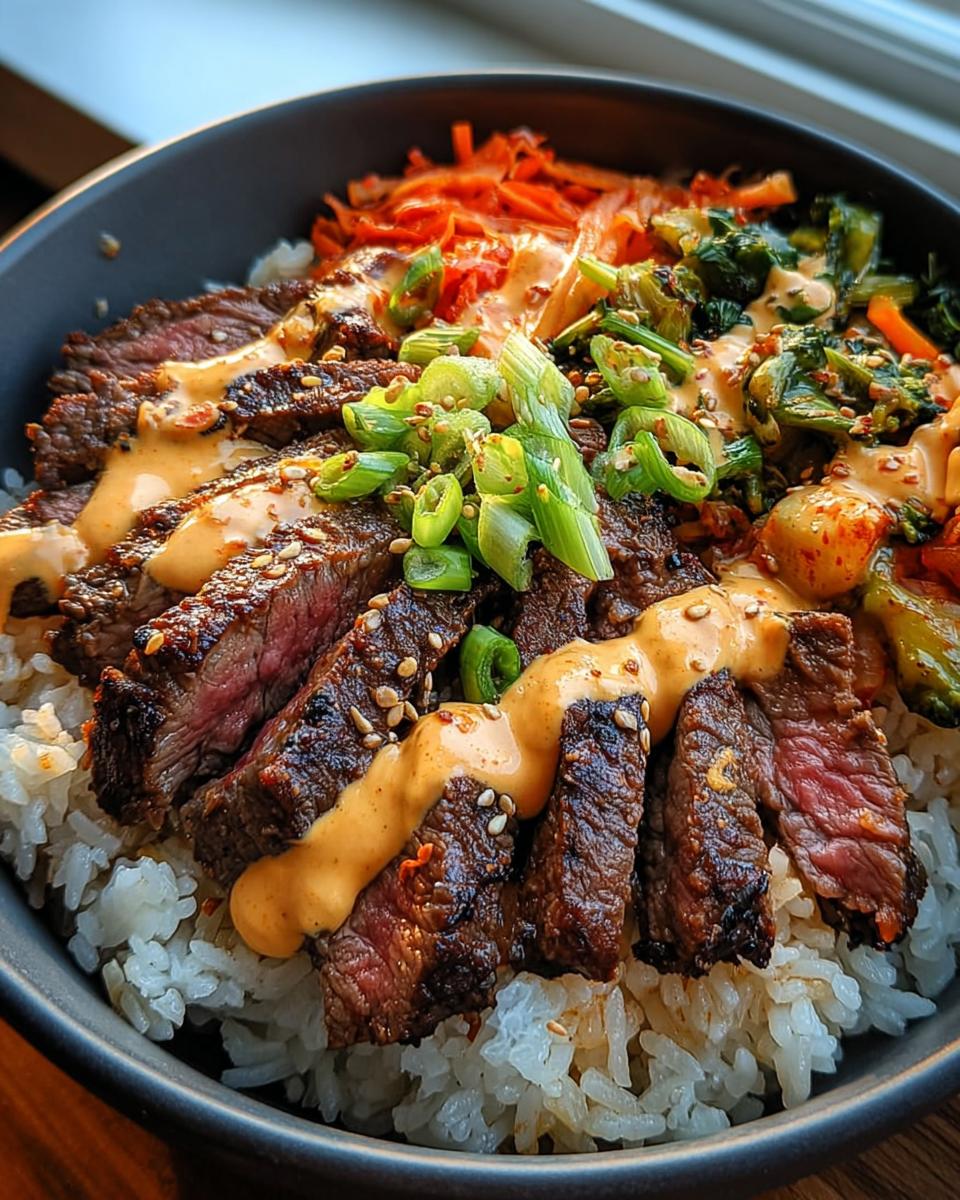
Time to build your masterpiece! Divide the warm rice between your serving bowls. Then, artfully arrange the thinly sliced steak and your colorful, sautéed veggies right on top. Make it look pretty – remember, we eat with our eyes first! Finally, grab that spicy cream sauce you made and drizzle it generously all over everything. Finish it off with a sprinkle of sesame seeds and some thinly sliced green onions. Ta-da! You’ve just made restaurant-worthy bowls!
Tips for Perfect Korean BBQ Steak Rice Bowls
Making these bowls absolutely perfect every single time is my goal, and trust me, a few little tricks make all the difference! It’s all about those small details that elevate your cooking from good to *chef’s kiss*. If these don’t quite hit the spot, you can always try something like these sheet pan chicken and veggies for another easy flavorful dinner idea!
First off, don’t be shy with the marinade! Letting that flank steak sit in the mixture for at least 30 minutes (or even overnight in the fridge) really lets the flavors soak in. When you’re searing the steak, make sure that pan is nice and hot. That’s how you get that gorgeous crust and keep the inside juicy. For the spicy cream sauce, taste and adjust! If you love a serious kick, add another spoonful of gochujang. Not a big fan of sour cream? A thick Greek yogurt can work in a pinch for a slightly different tang. And remember, slicing the steak against the grain is non-negotiable for tenderness. It makes every single bite melt in your mouth!
Ingredient Notes and Substitutions
Sometimes you might be missing a key ingredient or just want to mix things up, and that’s totally fine! Here are a few little notes and swaps that work wonders for these Korean BBQ Steak Rice Bowls.
Gochujang is the heart and soul of our spicy cream sauce. It’s a fermented Korean chili paste, and it has this amazing savory, sweet, and spicy flavor that you just can’t get anywhere else. If you absolutely can’t find it, you could try a mix of sriracha and a tiny bit of miso paste, but honestly, it’s worth seeking out for the real deal!
For the flank steak, don’t stress if you don’t have it. A good sirloin steak, ribeye, or even skirt steak will work beautifully. Just make sure to slice them against the grain after cooking for that super tender bite. If you’re looking for a plant-based option, firm tofu or even some hearty mushrooms like king oyster mushrooms would be delicious marinated and cooked up!
Frequently Asked Questions about Korean BBQ Steak Rice Bowls
Got questions? I’ve got answers! It’s totally normal to have a few things pop up when you’re trying a new recipe, especially one with a few fun twists like these Korean BBQ Steak Rice Bowls. Here are some things people often ask:
Can I make the spicy cream sauce ahead of time?
Oh heck yes! The spicy cream sauce is actually *better* if you make it a little ahead of time. This gives all those flavors – the gochujang, honey, lime, and sour cream – a chance to really meld together. Just pop it in an airtight container in the fridge, and it should be good for a couple of days. Give it a quick stir before you serve it up!
What if I don’t have gochujang? Can I use something else?
This is a common one! Gochujang is pretty unique, but I get it if you can’t find it. The best substitute I’ve found is a mix of sriracha and a tiny bit of miso paste for that savory depth. You might need to play around with the honey and lime juice a bit to get the balance right, but it’ll still be delicious! For more bowl inspiration, check out this yummy vegetable quinoa fried rice.
How can I make this recipe spicier or milder?
The beauty of this dish is how customizable it is! For a spicier kick, just add more gochujang to the sauce, or maybe even a pinch of red pepper flakes when you’re searing the steak. If you prefer it milder, start with less gochujang, or even just use a tiny drizzle of sriracha instead. You can also control the heat by how much sauce you drizzle on top.
Can I use beef other than flank steak?
Absolutely! Flank steak is great because it’s flavorful and tender when sliced thinly, but honestly, any good cut of steak will work. Ribeye, sirloin, or even a nice skirt steak would be fantastic. Just make sure to slice it against the grain after cooking for maximum tenderness. Chicken thighs or even firm tofu would be delicious marinated and cooked up in this recipe too!
Storing and Reheating Your Korean BBQ Steak Rice Bowls
Got delicious leftovers? Lucky you! To store, pop any extra Korean BBQ Steak Rice Bowls into an airtight container and keep them in the fridge for up to 2-3 days. When you’re ready to enjoy them again, the best way is to reheat everything separately. Gently warm the steak and veggies in a skillet over low heat with a tiny splash of water or broth, and then microwave your rice. Drizzle any extra spicy cream sauce on top, and voila – almost like the first time!
Estimated Nutritional Information
Just a heads-up, the nutritional info here is an estimate, you know? It can totally wiggle around depending on the exact ingredients you use and how big your bowls are. But roughly, one serving of these incredible Korean BBQ Steak Rice Bowls with Spicy Cream Sauce is going to pack around 550-650 calories, about 30-40g of protein, 50-60g of carbs, and 25-35g of fat, with a nice bit of fiber too!
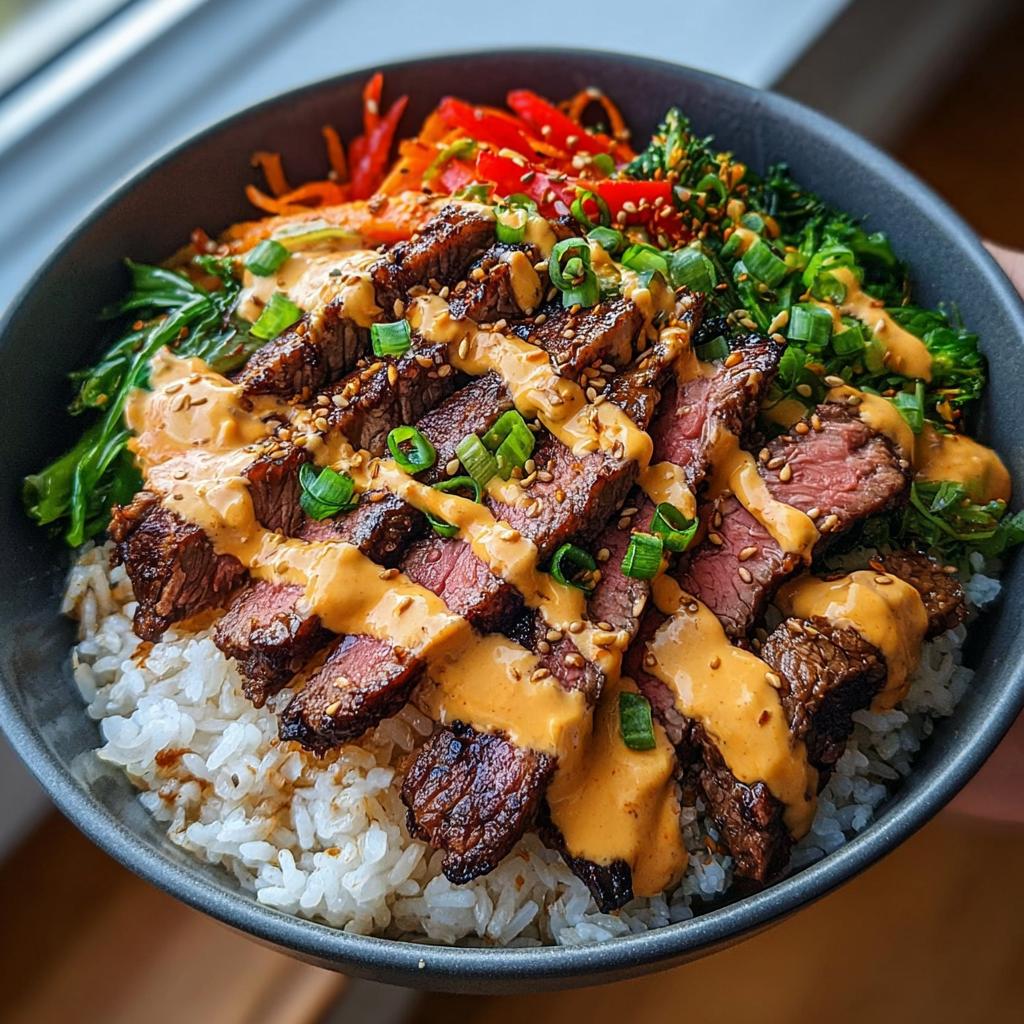
Korean BBQ Steak Rice Bowls with Spicy Cream Sauce
Ingredients
Equipment
Method
- Combine soy sauce, brown sugar, sesame oil, minced garlic, and grated ginger in a mixing bowl. Add the flank steak and coat thoroughly. Marinate for at least 30 minutes.
- Prepare rice according to package instructions. Set aside and keep warm.
- In a small bowl, whisk together sour cream, gochujang, honey, and lime juice until smooth. Set aside.
- Heat vegetable oil in a large skillet over medium-high heat. Remove steak from marinade, let excess drip off. Sear for 4-5 minutes per side for medium-rare, or to your desired doneness.
- Add chopped vegetables to the same skillet. Sauté for 3-5 minutes until tender-crisp.
- Transfer steak to a cutting board and let rest for 5 minutes. Slice thinly against the grain.
- Portion rice into serving bowls. Arrange sliced steak and sautéed vegetables on top.
- Drizzle generously with the spicy cream sauce. Garnish with sesame seeds and sliced green onions.
Notes
Tried this recipe?
Let us know how it was!
Visual Culinary Artist & Aesthetic Designer
When the pandemic killed my career as a luxury hotel photographer overnight, I was stuck in my studio apartment with nothing but time and vegetables. That’s when I started treating meal prep like photography projects—and discovered that the same principles that made five-star dishes camera-ready could turn humble zucchini noodles into social media gold.
My fine arts degree from Parsons taught me that people eat with their eyes first. After years behind the lens capturing haute cuisine, I realized that successful dieting often depends more on visual satisfaction than pure nutrition. When your food looks amazing, you actually want to stick with your eating plan.
My recipe development feels more like an art studio than a test kitchen. I use color theory to guide ingredient selections—purple cabbage with golden cauliflower, emerald herbs against ivory cheese. My “Edible Landscapes” series transforms standard low-carb ingredients into miniature scenic compositions that make vegetables feel aspirational rather than obligatory.
I spend evenings exploring art galleries and practicing watercolor painting, always looking for inspiration. My philosophy is simple: make low-carb food visually irresistible, and dietary compliance becomes an aesthetic choice rather than a health sacrifice.