
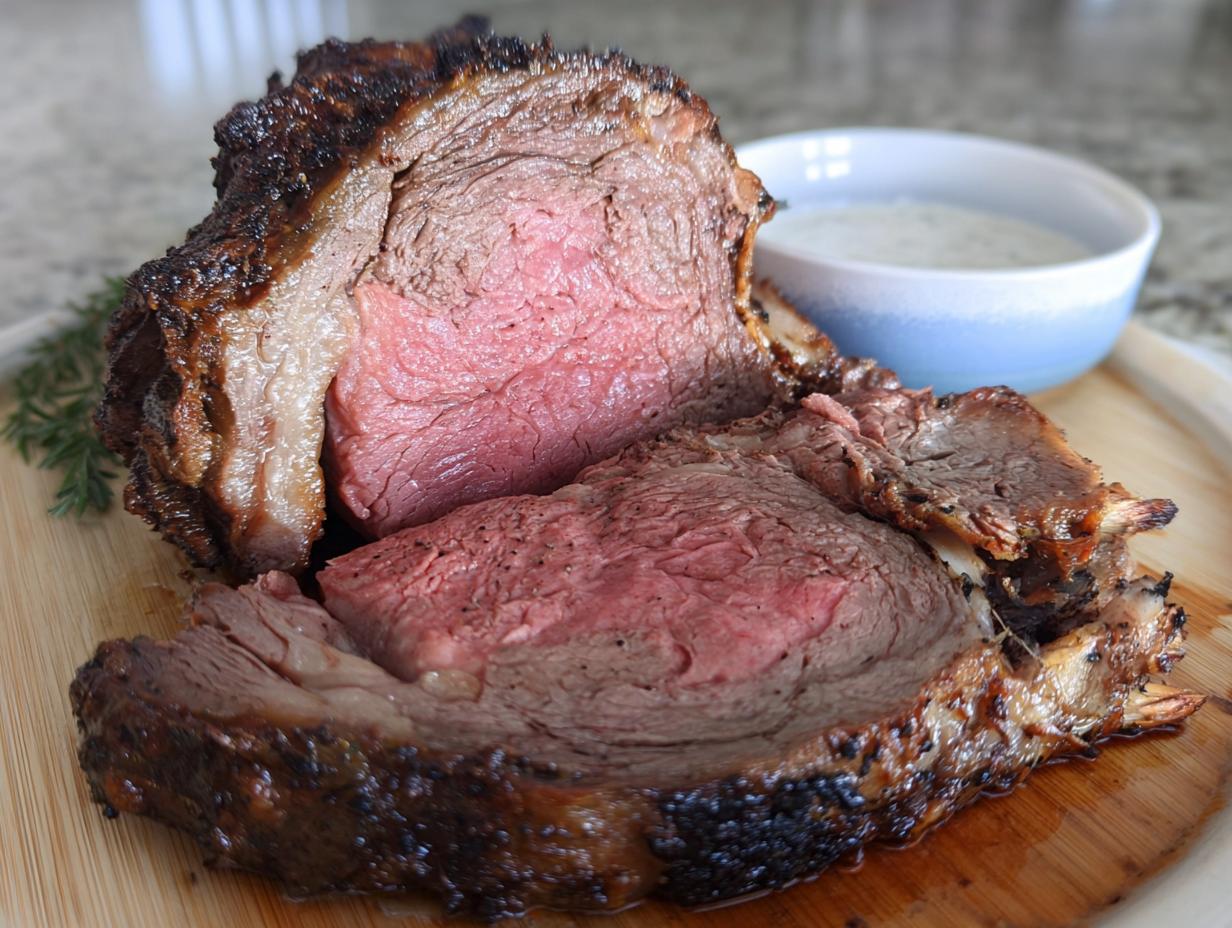
Oh, prime rib. Just hearing the words can bring on a cold sweat, right? It’s the undisputed king of holiday meals, and if you’re like me, the thought of spending all that money on a huge roast only to have it end up gray and overcooked is terrifying! I remember the first time I attempted this feast for a special dinner. My kitchen was filled with the heady aroma of garlic and herbs, but I couldn’t shake the anxiety of whether I’d get the temperature just right. I obsessively checked my meat thermometer every few minutes until the glorious moment arrived when I pulled that roast from the oven, perfectly medium-rare. The joy on my family’s faces as I sliced into that tender meat made all the uncertainty worth it. That moment completely changed how I approach cooking big cuts! I’m Jolie, and I’m here to tell you that feeling is unnecessary. We’re using my foolproof **Prime Rib Time & Temp Chart — Medium-Rare Every Time** method, which takes the stress out of things so you can just enjoy the amazing roast you’ve created. You can read more about my approach to balanced living over at my introductory page if you’re curious.
This method is how you ensure that gorgeous pink center every single time. Forget guesswork; we’re relying on reliable heat and time. Trust me, once you see how simple this is, you’ll look forward to cooking the perfect **Prime Rib Roast Recipe**!
Why You Need This Prime Rib Time & Temp Chart — Medium-Rare Every Time
Listen, cooking a massive chunk of beef like a 4-rib roast can feel like a cooking tightrope walk. You’re worried about the center being juicy while making sure the outside gets that beautiful crust. That’s exactly why I developed this system! This **Prime Rib Time & Temp Chart — Medium-Rare Every Time** eliminates all the second-guessing for home cooks like us who just want perfection without the panic.
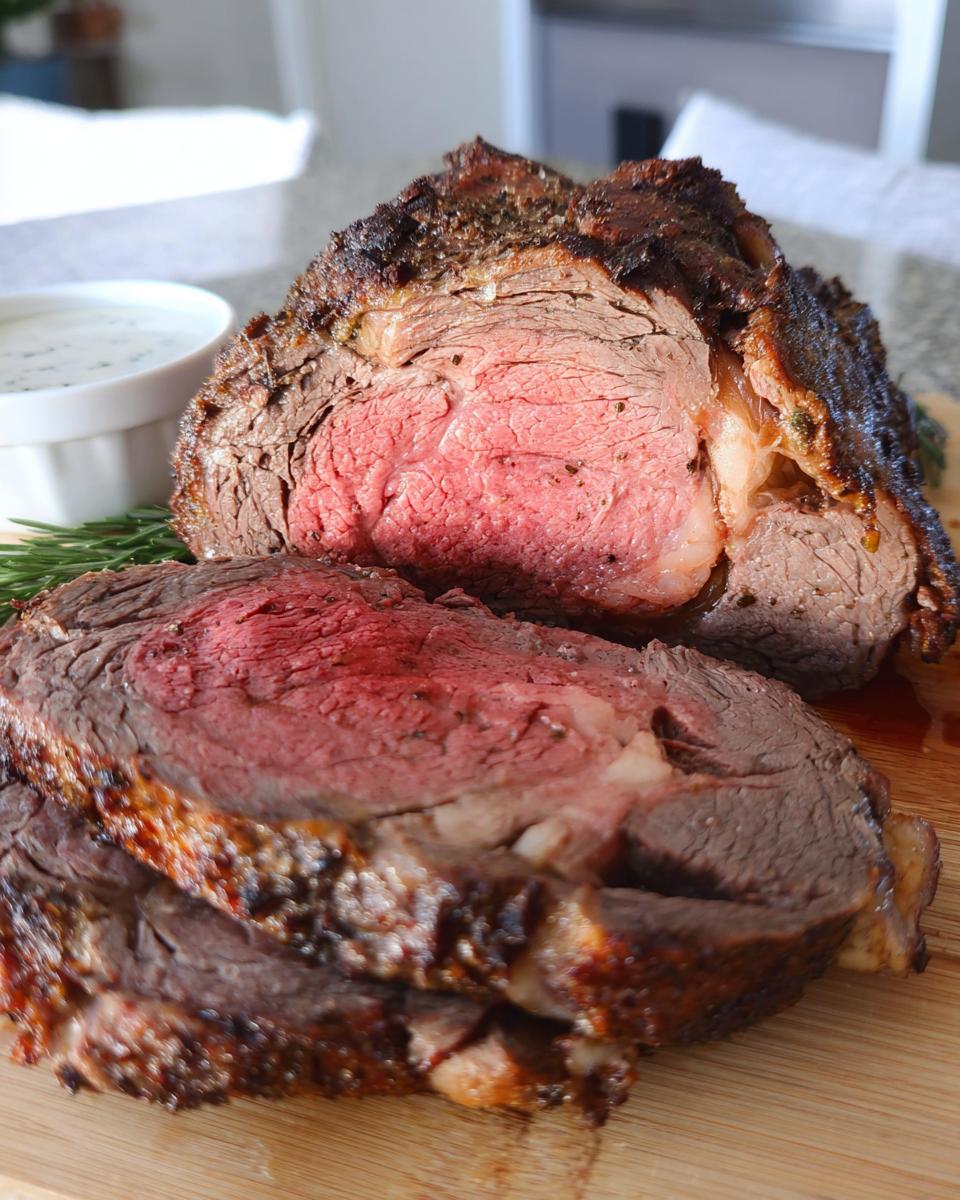
- It means no more frantic temperature checking during crucial family moments.
- You get that coveted medium-rare center consistently—it’s just that easy.
- It takes the stress out of serving a show-stopping centerpiece for your holiday meal.
Consistency is Key for Your Prime Rib Roast Recipe
When you’re managing a roast this big, consistency isn’t just nice, it’s vital! We aren’t relying on luck here. By sticking to the exact searing temperature and the long, low-temperature finish, we ensure that heat penetrates evenly. Think of this chart as your shortcut to precision. It removes the anxiety of under- or overcooking your expensive cut of meat, giving you dependable results every single time you go for that **Prime Rib Time & Temp Chart — Medium-Rare Every Time**!
Essential Equipment for Your Prime Rib Time & Temp Chart — Medium-Rare Every Time
Now, listen closely: you cannot achieve this level of perfection without having the right gear ready. It’s not fancy equipment we’re talking about, but accuracy is everything when you’re dealing with a hefty roast. While you might think you can eyeball this, trust me, getting that perfect medium-rare using my **Prime Rib Time & Temp Chart — Medium-Rare Every Time** depends on a few key tools.
The absolute non-negotiable item here is a good, fast, instant-read meat thermometer. Seriously, if you don’t have one, run and grab one now! Without it, you’re just guessing, and we aren’t guessing with ten pounds of beef.
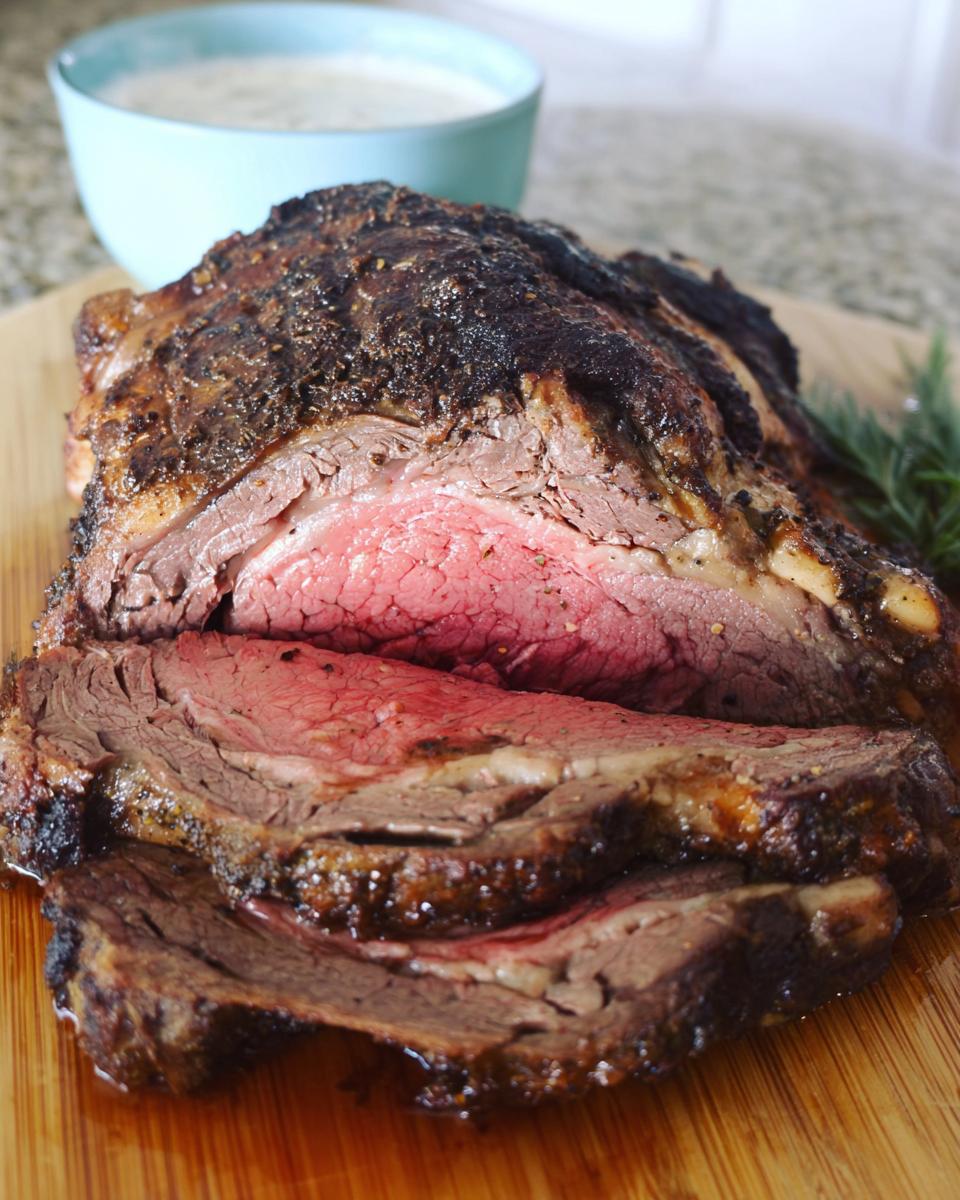
Here’s the rundown of what you’ll need sitting on the counter:
- Your oven, naturally!
- A heavy-duty sheet pan—make sure it has at least 1-inch sides so the juices stay contained.
- A small bowl for mixing up those awesome seasonings.
- That essential instant-read meat thermometer—this is your secret weapon!
- A sharp knife and some good meat forks for carving later.
- If you’re making the au jus, you’ll want a large, deep skillet to keep it warm.
Having these on hand makes following the temperature guide for your **Prime Rib Roast Recipe** incredibly straightforward. You can check out my favorite kitchen essentials guide over at this page if you need inspiration!
Ingredients for the Perfect Prime Rib Time & Temp Chart — Medium-Rare Every Time
Okay, now that we have our gear selected, let’s talk about what goes into this masterpiece. Getting the right ingredients is genuinely the first step toward nailing that **Prime Rib Time & Temp Chart — Medium-Rare Every Time**. Don’t buy that roast straight from the fridge, though!
Remember, the instructions say about 15 minutes of prep, but that’s just the seasoning time. You absolutely must pull that ten-pound roast—bone-in or boneless—out of the fridge at least 4 to 5 hours ahead of time to let it get truly room temperature. This is crucial for even cooking, even if the prep time in the notes seems short!
You can check out some related fantastic recipes over at this link, but here’s what you need for the star attraction.
Seasoning Mix Details
We keep this simple because we want that gorgeous beef flavor to sing! We’re talking about garlic powder, onion powder, black pepper, and seasoned salt (Lawry’s is my go-to). Just mix those up and rub them all over the exterior of that room temp roast. Don’t be shy; you want a good coating!
Making the Optional Creamy Horseradish Sauce
If you’re feeling indulgent—and honestly, why wouldn’t you be?—you’ll need sour cream, whipping cream, a dash of hot sauce, Worcestershire sauce, prepared horseradish (make sure it’s refrigerated stuff!), spicy brown mustard, wine vinegar, and crushed garlic. Grab those ingredients, and we’ll mix up that sharp sauce later when we get to the full instructions.
We also have ingredients for a simple au jus, but focus on that meat first! Getting the seasoning right is half the battle in achieving your **Prime Rib Time & Temp Chart — Medium-Rare Every Time** success!
Step-by-Step Instructions for Cooking Prime Rib
This is where the magic happens! If you follow these steps exactly, using my **Prime Rib Time & Temp Chart — Medium-Rare Every Time** method, your anxiety will disappear. The beauty of this technique is that the initial cooking tells you approximately how long it will take based on the weight, but the long, controlled rest handles the finishing perfectly. Even if you have a **Boneless Prime Rib Recipe**, you’ll use the same weight calculation for the initial sear time!
Prep and Seasoning for Your Rib Roast Recipe
Remember what I said about room temperature? Pull that roast out about four or five hours early so it’s not fridge-cold. Pat it nice and dry—we want that crust! Place it fat-side up on your sturdy sheet pan. Now, take the spice mix we talked about and rub it all over every surface. If you have a bone-in cut, now is the moment to make sure those bones are tied snugly back on with kitchen twine. It’s all about getting ready for that beautiful presentation later!
The High-Heat Sear and Temperature Drop Technique
We start hot to build that flavorful crust! Crank your oven up to 500 degrees F. Pop that seasoned roast in the lower third of the oven. For medium-rare, you cook it hot for exactly 6 minutes per pound. Once that timer goes off, you immediately drop the temperature down to 170 degrees F. Set a new timer for two whole hours—that’s 120 minutes! And here’s the biggest rule: **Do not open the oven door** for those two hours. The residual heat is doing the crucial finishing work!
Final Temperature Check and Slicing for Medium-Rare Techniques
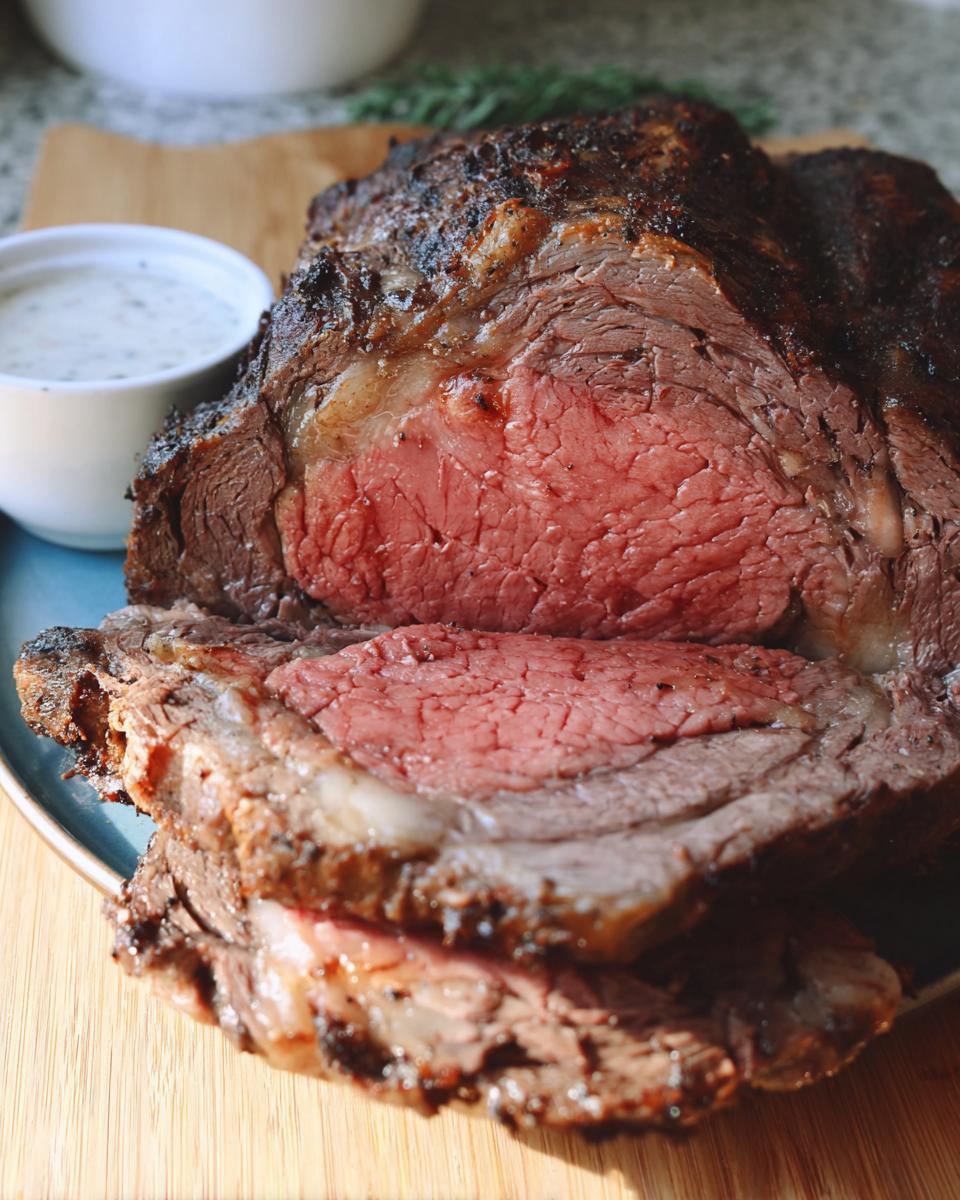
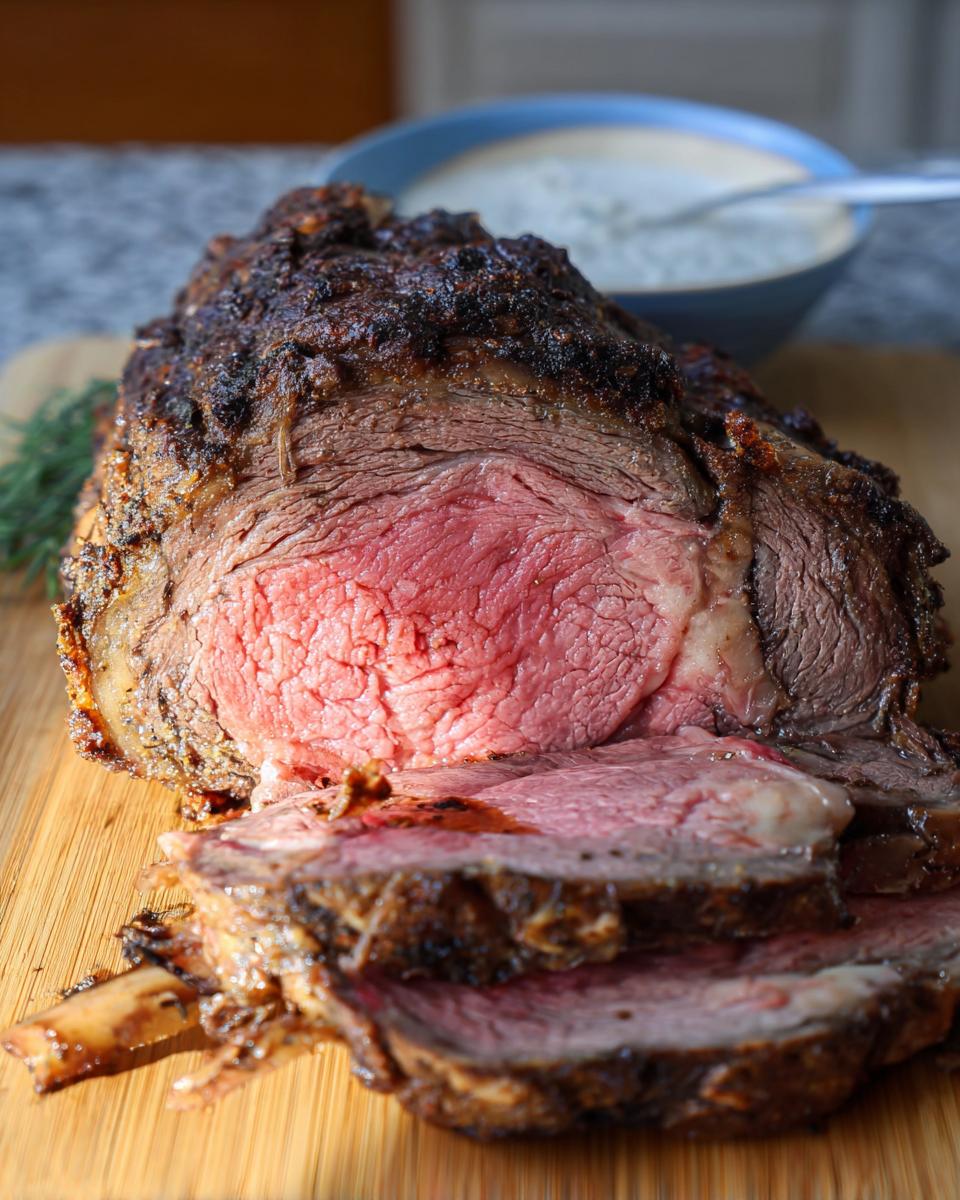
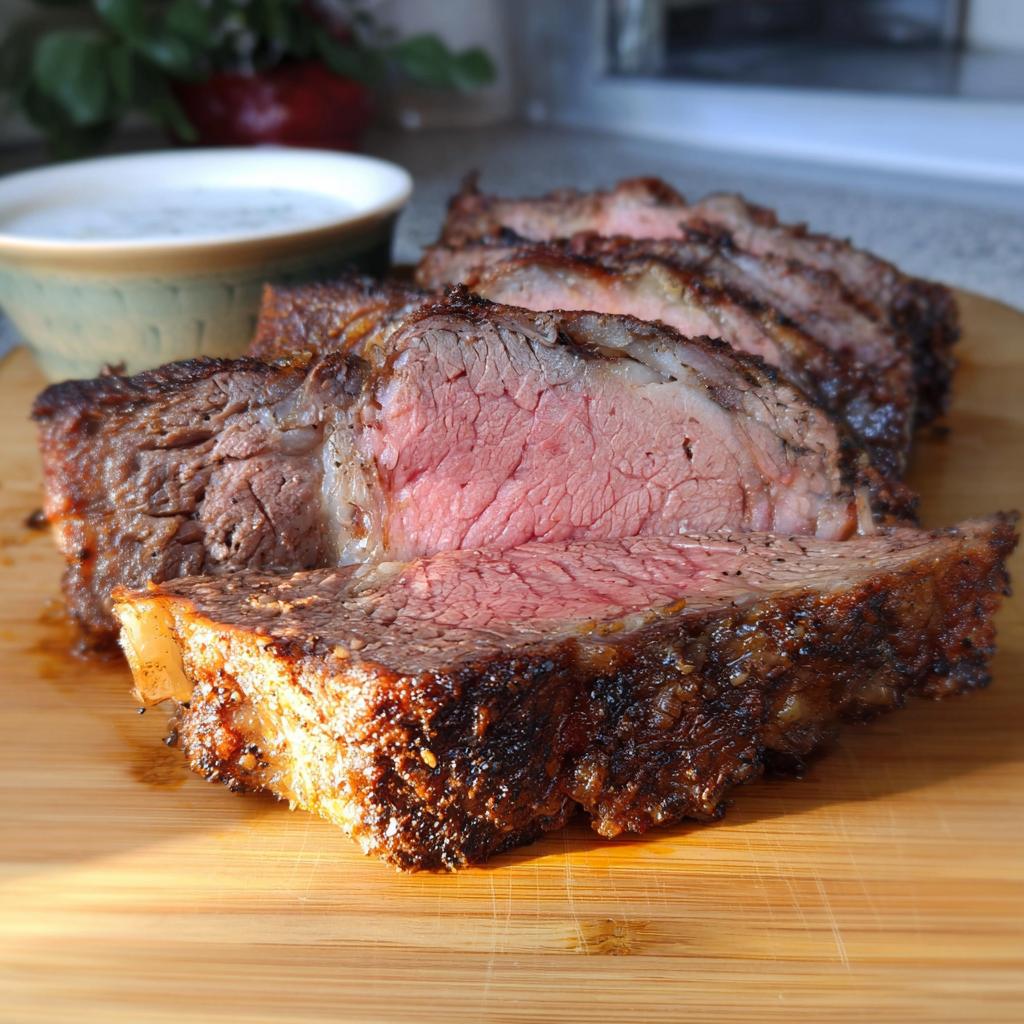
When the two hours are up, it’s time for the moment of truth! Insert your instant-read meat thermometer into the thickest part of the meat, avoiding the bone if you can. For that spectacular medium-rare result, we are looking for 130°F to 135°F. If it’s a little shy, just bump the oven backup to 375°F and check it every ten minutes. Once it hits that target, pull it out! Use your knife or shears to snip those strings, lift the roast gently off the bone, let it rest on a cutting board for a minute or two, and slice about 3/4 inch thick. Now you’ve officially nailed the **Prime Rib Time & Temp Chart — Medium-Rare Every Time**!
You can explore some useful tips on making dinner foolproof over at this link, and for more reliable cooking methods, Chef Alli has great tips, too, though mine are just as reliable for this specific roast prep!
Understanding the Prime Rib Time & Temp Chart — Medium-Rare Every Time
I know you were hoping for a giant spreadsheet of weights and times, but the real magic here is understanding the *principle* that makes this **Prime Rib Time & Temp Chart — Medium-Rare Every Time** work so flawlessly, especially for a large roast!
Since this method relies on weight calculation for the initial blast of heat, remember the formula: we sear at 500 degrees F for about 6 minutes per pound. That sets that amazing crust and gets the cooking started fast. Then comes the key step that separates the pros from the panicked cooks: dropping the oven way down to 170 degrees F and just letting it sit there for a solid two hours.
This two-stage cooking process is what guarantees consistency whether you are working with a boneless or bone-in cut. Medium-rare success means pulling that roast when your thermometer reads 130°F to 135°F. If you’ve got guests who like it more done, aim for 135°F to 140°F for medium. Follow this guide, and stop stressing about the numbers!
You can always check out more foundational temperature guides that help anchor cooking principles like this over at this guide.
Tips for Success with Your Cooking Prime Rib
Even with the best **Prime Rib Time & Temp Chart — Medium-Rare Every Time**, a few little tricks make a huge difference when you’re **Cooking Prime Rib**. I learned these the hard way, usually by making a tiny mistake that threw off the center just a hair! Don’t make my errors; follow these tips for a flawless centerpiece.
First, thermometer placement matters! Always check the temperature deep in the thickest part of the meat, and try your best to avoid hitting the bone, even if it’s tied on. The bone heats differently and will give you a false reading. Second, if your roast is bigger than you expected, that 6 minutes-per-pound sear might need to be adjusted slightly, but rely on the resting temperature much more than the initial searing time.
Finally, what about that one uncle who insists on well-done? Don’t ruin the whole roast for him! Once you pull the whole thing out, you can slice off his piece and quickly simmer it in a bit of your warm au jus for a minute or two. It rehydrates it and warms it through without drying out the rest of your perfectly medium-rare beauty. If you’re looking for ways to make other weeknight meals foolproof, check out my guide on foolproof chicken preparations!
Making the Optional Au Jus and Horseradish Sauce
Listen, if you’ve gone to all this effort getting that perfect roast, you absolutely must treat yourself to the optional sides! They elevate the whole experience from a great meal to a legendary one. Trust me, the au jus is shockingly simple, and the horseradish sauce gives you that perfect spicy kick!
For the au jus, you basically just need hot liquid. Bring 3 cups of water to a boil in a deep skillet. Drop in 5 teaspoons of that Beef Better Than Bouillon Concentrate—it really packs an umami punch—along with a tablespoon of soy sauce. Whisk it until it’s all dissolved and tastes savory enough for you. Keep it warm on a back burner!
Now, for the horseradish sauce, just mix everything together in a small bowl until it’s creamy and smooth: sour cream, the heavy whipping cream, mustard, Worcestershire, horseradish, vinegar, and crushed garlic. If you want it sharper, add more prepared horseradish! If you want to get really elaborate on sauce-making in general, you can check out some tips for rich gravies over at this link. Enjoy dipping!
Storage and Reheating Instructions for Leftover Prime Rib
The bad news? The party’s over. The good news? You get prime rib leftovers! This meat is so rich you don’t want to dry it out on the second go-around. The very best way to store leftovers is to slice them thinly first, then place them in an airtight container.
When you’re ready to enjoy them the next day, ditch the microwave! That’s an instant ticket to tough beef. Instead, take a small amount of your reserved au jus—or just some beef broth—and warm it gently on the stovetop. Dip the slices briefly into that warm liquid just to moisten them before serving. It keeps them tender and juicy! For more great meal prep and leftovers handling, you can check out my guide to busy weeknight dinners here.
Frequently Asked Questions About Your Prime Rib Roast Recipe
I know that when you get right down to it, you’re going to have a few jitters about hitting that perfect finish on your roast. That’s totally normal! Even using my **Prime Rib Time & Temp Chart — Medium-Rare Every Time**, people always have last-minute questions. Here are the ones I get asked the most often as people plan their perfect **Prime Rib Roast Recipe**!
What internal temperature is considered medium-rare for prime rib?
For that fantastic, blushing pink center that makes everyone gasp, you are aiming to pull that roast out of the oven when the thermometer reads between 130°F and 135°F. Now, the secret part? Carryover cooking! Since we cook it low and slow during the rest, the internal temperature will climb another 3 to 5 degrees while it sits for those two hours. So, pulling it at 130°F guarantees you wonderful medium-rare results when it’s time to slice. If you start shy, you can always put it back in briefly to bring it up a touch hotter!
Does the bone-in or boneless prime rib roast cook faster?
This is a great question, especially if your grocery store only had the **Boneless Prime Rib Recipe** available that day! Generally speaking, the bone-in version takes a tiny bit longer to cook because the bone acts as an insulator, slowing down heat transfer right at the center where it’s touching the meat. That’s why for the time calculations in our **Prime Rib Time & Temp Chart — Medium-Rare Every Time**, we rely so heavily on the weight. If you go boneless, it might be just a touch quicker, but sticking to the weight-based timing for the initial sear, and then trusting the long rest, works well for both styles!
If you have any more recipe questions, feel free to browse my collection of all my favorite recipes right here!
Serving Suggestions for Your Prime Rib Time & Temp Chart — Medium-Rare Every Time Feast
Wow, you did it! You have a perfectly cooked roast thanks to the **Prime Rib Time & Temp Chart — Medium-Rare Every Time**, and now you need the perfect supporting cast. Don’t let the sides fail this magnificent beast!
You simply can’t go wrong with creamy mashed potatoes; they are the perfect vehicle for soaking up any extra au jus we made. I also love roasting simple root vegetables like carrots and parsnips tossed with fresh rosemary right alongside in the oven—it saves on cleanup, too! If you’re looking for some easy, hands-off side dish ideas, check out my guide to one-pan meals; many of those vegetable ideas work perfectly here!
A crisp, bright green salad helps cut through the richness of the beef. Enjoy every single bite of your holiday triumph!
Prime Rib Time & Temp Chart — Medium-Rare Every Time
Ingredients
Equipment
Method
- 4-5 hours before cooking, remove the prime rib roast from refrigeration and unwrap it. Keep the label to note the weight for cooking calculations.
- Preheat your oven to 500 degrees F. Place the oven rack in the lower third of the oven.
- Place the unseasoned roast, fat side up, on a heavy-duty sheet pan with 1-inch sides. Combine garlic powder, onion powder, and black pepper with seasoned salt in a small bowl. Rub this spice blend over the entire exterior of the roast.
- Place the prepared roast into the preheated oven, uncovered. Cook for 6 minutes per pound for medium-rare or 7 minutes per pound for medium.
- When the cooking time is up, immediately turn the oven temperature down to 170 degrees F. Set a timer for 2 hours and leave the roast in the oven to rest and finish cooking from residual heat. Do not open the oven door during this time.
- After 2 hours, open the oven door and check the internal temperature with an instant-read meat thermometer. For medium-rare, aim for 130-135°F. For medium, aim for 135-140°F.
- If the internal temperature is below your target, preheat the oven to 375 degrees F. Return the roast to the oven and check the temperature every 10 minutes until it reaches your desired doneness.
- Use a sharp knife or kitchen shears to snip the strings holding the roast to the bones.
- Using two meat forks, lift the roast from the bones and pan, and place it onto a cutting board.
- Slice the prime rib into 3/4 inch thick slices. If desired, pour some warm au jus over the slices and add a dollop of horseradish sauce. Serve immediately.
- To make the horseradish sauce, combine all sauce ingredients in a small bowl until smooth. Store in the refrigerator until ready to serve.
- To make the au jus, bring water to a boil in a large, deep skillet. Reduce heat to low, add bouillon concentrate and soy sauce, and whisk until blended. Season with salt and pepper to taste. Keep warm.
Notes
Tried this recipe?
Let us know how it was!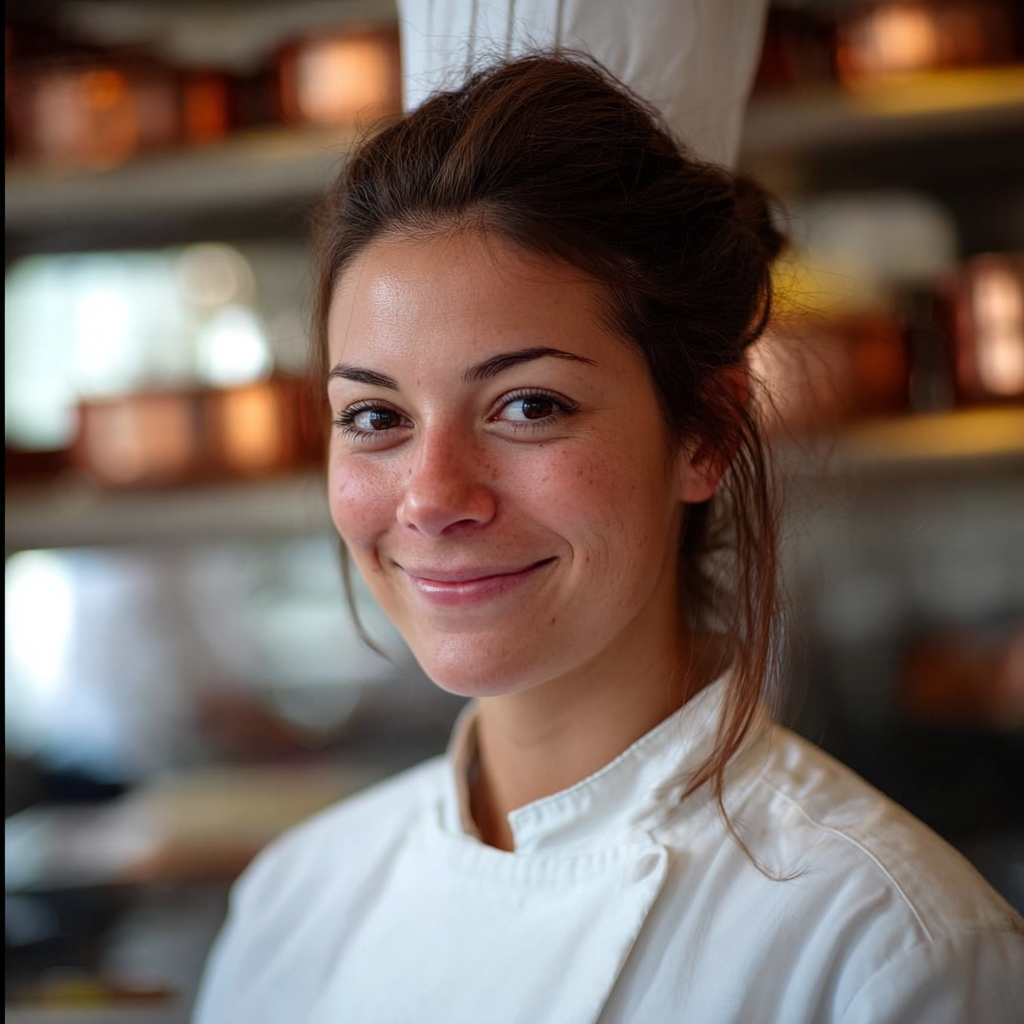
Mindfulness & Emotional Wellness Specialist
I never thought I’d leave my career as a corporate litigation attorney, but a panic attack in a courthouse bathroom changed everything. After struggling with emotional eating for over a decade—starting in college and getting worse through the stress of law school—I realized that no diet could fix what was really going on inside me.
My breakthrough came through mindfulness meditation training. Working with Jon Kabat-Zinn’s protocols, I discovered that my relationship with food reflected deeper patterns of anxiety and perfectionism that I’d been avoiding for years. That’s when I understood that sustainable eating changes require internal transformation, not just external rules.
Now I treat meal preparation as meditation practice. My “Mindful Kitchen” workshops help people transform ordinary cooking into opportunities for self-awareness and emotional healing. I’ve developed over 180 recipes designed for slow, mindful preparation—complex enough to keep you present, simple enough not to overwhelm your nervous system.
I believe food becomes medicine when we approach it with presence rather than reactivity. The kitchen can be our monastery if we choose to enter it with reverence.