Ingredients
Equipment
Method
- Preheat your oven to 350°F (177°C). Grease four 8-inch or 9-inch cake pans. Line them with parchment paper rounds, then grease the parchment paper. This helps the cakes release easily.
- Make the cake: In a large bowl, whisk together the flour, sugar, cocoa powder, espresso powder (if using), baking soda, baking powder, and salt. Set this dry mixture aside.
- In another large bowl, use a mixer (handheld or stand) with a whisk attachment to combine the sour cream, oil, and eggs on medium-high speed until mixed. Add the buttermilk and vanilla and mix until combined. Pour the dry ingredients into the wet ingredients. Add the hot water or coffee and whisk or beat on low speed until just combined. Gently fold in the floured mini chocolate chips, if you are using them. Divide the batter evenly among the prepared pans.
- Bake for 19–23 minutes. Baking times can vary, so check your cakes. They are done when a toothpick inserted into the center comes out clean. Let the cakes cool in the pans on a cooling rack for 1 hour. Run a knife around the edges to loosen the sides, then remove the cakes from the pans. Peel off the parchment paper and place the cakes on the rack to finish cooling completely. The cakes might sink slightly in the middle as they cool; this is normal.
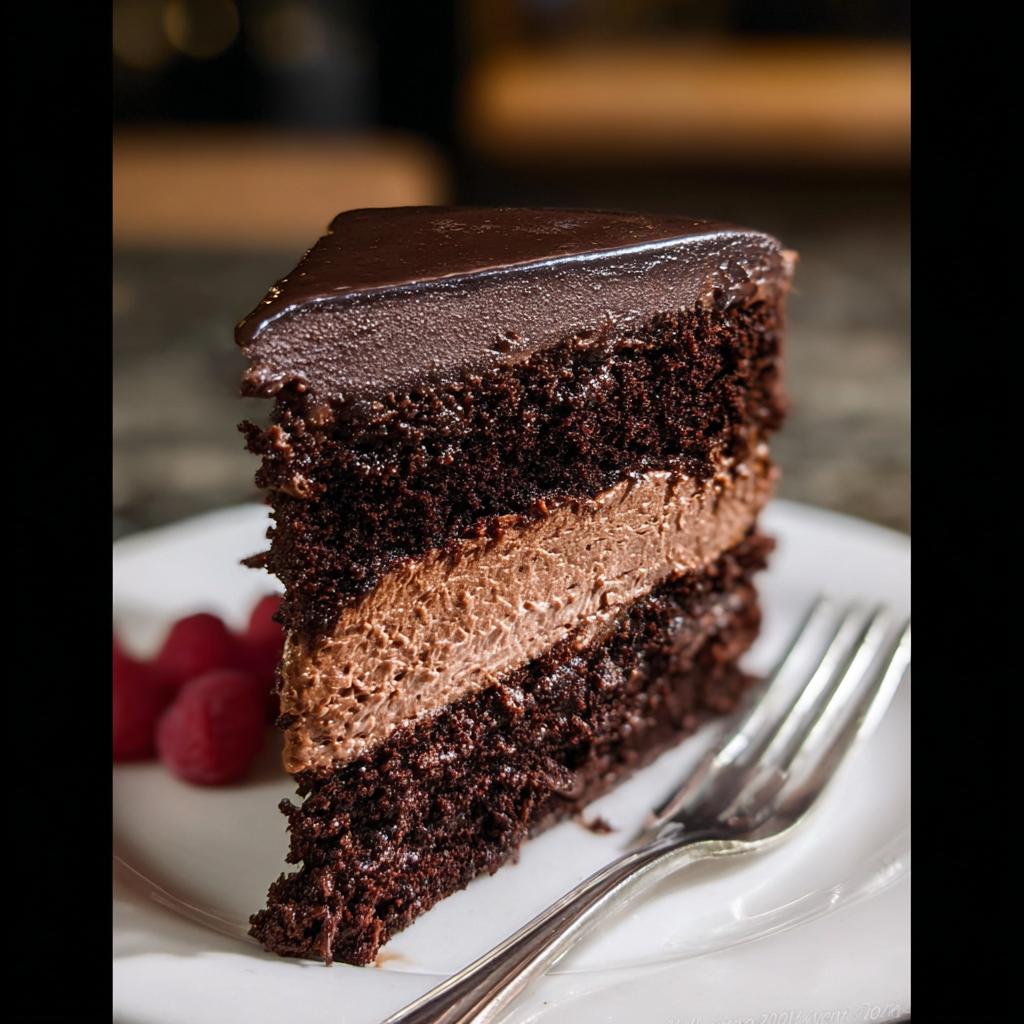
- Make the chocolate mousse: In a small bowl, whisk the hot water and cocoa powder until smooth. Melt the chopped chocolate using a double boiler or the microwave. If using the microwave, place the chocolate in a heat-proof bowl and microwave in 20-second intervals, stirring after each, until melted and smooth. Pour the hot water/cocoa mixture into the melted chocolate and stir until thick and smooth. Set aside. In a large bowl, whip the heavy cream, confectioners’ sugar, and vanilla extract with a mixer on medium-high speed until medium peaks form, about 3 minutes. Medium peaks are softer than stiff peaks but hold their shape. Pour the chocolate mixture into the whipped cream and gently fold together with a spatula. Be careful not to overmix. Cover the mousse and refrigerate for at least 2 hours or up to 2 days. This makes about 4.5 cups.
- Assemble the cake before making the ganache: If needed, level the cakes by slicing off the tops with a large serrated knife to create a flat surface. Place one cake layer on your serving plate or cake stand. Spread about 1.5 cups of chocolate mousse evenly over the top. Place the second cake layer upside down on top of the mousse and spread another 1.5 cups of mousse. Add the third cake layer right side up and spread another 1.5 cups of mousse. Top with the final cake layer. Spread the remaining mousse on the top and sides of the cake for a crumb coat. Use a bench scraper to smooth the sides. Refrigerate the cake for at least 1 hour and up to 4 hours.
- Make the chocolate ganache: Place the chopped chocolate in a medium heat-proof bowl. Heat the cream in a small saucepan over medium heat until it just begins to simmer gently. Do not let it boil rapidly. Pour the warm cream over the chocolate and let it sit for 2–3 minutes to soften. Stir slowly with a metal spoon or spatula until the chocolate is melted and the mixture is smooth. If the chocolate doesn't melt easily, do not microwave it. Refrigerate the ganache for at least 30 minutes or up to 1 hour to thicken.
- Pour or spoon the thickened ganache over the chilled cake. Use an icing spatula to smooth the top and sides. Add optional garnishes like fresh berries or chocolate shavings. Serve the cake immediately or chill, uncovered, for up to 4–6 hours before serving. The cake can be served at room temperature or chilled. Cover any leftover cake tightly and store it in the refrigerator for up to 5 days.
Notes
The personal story highlights the inspiration behind creating this cake for dietary needs. While this recipe is presented as a base, modifications would be needed to make it gluten-free or sugar-free. For example, using a gluten-free flour blend and a sugar substitute like erythritol or xylitol for the cake and mousse, and ensuring the chocolate used is suitable for the specific dietary requirements.